This is default featured slide 1 title

Go to Blogger edit html and find these sentences.Now replace these sentences with your own descriptions.

This is default featured slide 2 title

Go to Blogger edit html and find these sentences.Now replace these sentences with your own descriptions.

This is default featured slide 3 title

Go to Blogger edit html and find these sentences.Now replace these sentences with your own descriptions.

This is default featured slide 4 title

Go to Blogger edit html and find these sentences.Now replace these sentences with your own descriptions.

This is default featured slide 5 title

Go to Blogger edit html and find these sentences.Now replace these sentences with your own descriptions.

Showing posts with label Cracking. Show all posts

Pybelt - The Hackers Tool Belt

Pybelt is an open source hackers tool belt complete with:
  • A port scanner
  • SQL injection scanner
  • Dork checker
  • Hash cracker
  • Hash type verification tool
  • Proxy finding tool
  • XSS scanner
It is capable of cracking hashes without prior knowledge of the algorithm, scanning ports on a given host, searching for SQLi vulnerabilities in a given URL, verifying that your Google dorks work like they should, verifying the algorithm of a given hash, scanning a URL for XSS vulnerability, and finding usable HTTP proxies.

Screenshots
SQL Injection scanning made easy, just provide a URL and watch it work

Dork checker, have some Dorks you're not sure of? Go ahead and run the Dork check with the Dork as an argument, it will pull 100 URLs and give you success rate for the Dork

Hash cracking made simple, provide the hash type at the end ":md5, :sha256, etc" for a specific hash, or ":all" for all algorithms available on your machine

And many more!

Usage

Installation
You can either clone the repository
git clone https://github.com/ekultek/pybelt.git
or download the latest release as a zip/tar ball here
Once you have the program installed cd into the directory and run the following command:
pip install -r requirements.txt
This will install all of the programs needed libraries and should be able to be run from there.
###Functionality
python pybelt.py -p 127.0.0.1
Will run a port scan on your local host
python pybelt.py -s http://example.com/php?id=2
Will run a SQLi scan on the given URL
python pybelt.py -d idea?id=55
Will run a Dork check on the given Google Dork
python pybelt.py -c 9a8b1b7eee229046fc2701b228fc2aff:all
Will attempt to crack the hash using all algorithms available on the computer
python pybelt.py -v 098f6bcd4621d373cade4e832627b4f6
Will try to verify the hash type
python pybelt.py -f
Will find usable proxies
python pybelt.py -x http://127.0.0.1/php?id=1
Will search the URL for XSS vulnerability


Hydra 8.5 - Network Logon Cracker

 A very fast network logon cracker which support many different services.

See feature sets and services coverage page - incl. a speed comparison against ncrack and medusa.Number one of the biggest security holes are passwords, as every password security study shows.

This tool is a proof of concept code, to give researchers and security consultants the possiblity to show how easy it would be to gain unauthorized access from remote to a system.

There are already several login hacker tools available, however none does either support more than one protocol to attack or support parallized connects.

It was tested to compile cleanly on Linux, Windows/Cygwin, Solaris, FreeBSD/OpenBSD, QNX (Blackberry 10) and OSX.

Currently this tool supports the following protocols:
Asterisk, AFP, Cisco AAA, Cisco auth, Cisco enable, CVS, Firebird, FTP, HTTP-FORM-GET, HTTP-FORM-POST, HTTP-GET, HTTP-HEAD, HTTP-PROXY, HTTPS-FORM-GET, HTTPS-FORM-POST, HTTPS-GET, HTTPS-HEAD, HTTP-Proxy, ICQ, IMAP, IRC, LDAP, MS-SQL, MYSQL, NCP, NNTP, Oracle Listener, Oracle SID, Oracle, PC-Anywhere, PCNFS, POP3, POSTGRES, RDP, Rexec, Rlogin, Rsh, SAP/R3, SIP, SMB, SMTP, SMTP Enum, SNMP v1+v2+v3, SOCKS5, SSH (v1 and v2), SSHKEY, Subversion, Teamspeak (TS2), Telnet, VMware-Auth, VNC and XMPP.

CHANGELOG for 8.5
CHANGELOG for 8.5
===================
! Development moved to a public github repository: https://github.com/vanhauser-thc/thc-hydra

! Reports came in that the rdp module is not working reliable sometimes, most likely against new Windows versions. please test, report and if possible send a fix
* New command line option:
-b : format option for -o output file (json only so far, happy for patches supporting others :) ) - thanks to veggiespam for the patch
* ./configure now honors the CC enviroment variable if present
* Fix for the restore file crash on some x64 platforms (finally! thanks to lukas227!)
* Changed the format of the restore file to detect cross platform copies
* Fixed a bug in the NCP module
* Favor strrchr() over rindex()
* Added refactoring patch by diadlo
* Updated man page with missing command line options


Leviathan - Wide Range Mass Audit Toolkit


Leviathan is a mass audit toolkit which has wide range service discovery, brute force, SQL injection detection and running custom exploit capabilities. It consists open source tools such masscan, ncrack, dsss and gives you the flexibility of using them with a combination.
The main goal of this project is auditing as many system as possible in country-wide or in a wide IP range.

Main Features
Discovery: Discover FTP, SSH, Telnet, RDP, MYSQL services running inside a specific country or in an IP range via Shodan, Censys. It's also possible to manually discover running services on a IP range by integrated “masscan” tool.
Brute Force: You can brute force the discovered services with integrated “ncrack” tool. It has wordlists which includes most popular combinations and default passwords for specific services.
Remote Command Execution: You can run system commands remotely on compromised devices.
SQL Injection Scanner: Discover SQL injection vulnerabilities on websites with specific country extension or with your custom Google Dork.
Exploit Specific Vulnerabilities: Discover vulnerable targets with Shodan, Censys or masscan and mass exploit them by providing your own exploit or using preincluded exploits.

Integrated Tools
Masscan: It’s a very fast TCP port scanner by Robert David Graham. Leviathan uses masscan for detecting services on a huge IP range. https://github.com/robertdavidgraham/masscan
Ncrack: Ncrack is a high-speed network authentication cracking tool. Leviathan uses ncrack to brute force services such as FTP, SSH, RDP, Telnet, MYSQL etc. https://github.com/nmap/ncrack
DSSS (Damn Small SQLi Scanner): DSSS is a fully functional and minimal SQL injection vulnerability scanner by Miroslav Stampar. Leviathan uses DSSS to identify SQL Injection vulnerabilities on specific URLs. https://github.com/stamparm/DSSS

Installation
For detailed installiation, please visit our wiki page.

Kali Linux:
Download leviathan by cloning the Git repository:
git clone https://github.com/leviathan-framework/leviathan.git
Go inside the folder
cd leviathan
Install Python libraries:
pip install -r requirements.txt
It's done!

Debian/Ubuntu:
Download leviathan by cloning the Git repository:
git clone https://github.com/leviathan-framework/leviathan.git
Go inside the folder
cd leviathan
Run installiation script. It will setup required tools (ncrack, masscan) and python libraries.
bash scripts/debian_install.sh
It's done!

macOS:
If homebrew is not installed on your system, please install it first:
/usr/bin/ruby -e "$(curl -fsSL https://raw.githubusercontent.com/Homebrew/install/master/install)"
Download leviathan by cloning the Git repository:
git clone https://github.com/leviathan-framework/leviathan.git
Go inside the folder
cd leviathan
Run installiation script. It will setup required tools (ncrack, masscan) and python libraries.
bash scripts/macos_install.sh
It's done!

Requirements
Python version 2.7.x is required for running this program.
Supported platforms: Linux (Kali Linux, Debian, Ubuntu), macOS

Usage
Run the program with following command:
python leviathan.py
You can get basic usage information inside the menus. For detailed usage manual, visit our wiki page.

Screenshots


Hashview - A Web Front-End For Password Cracking And Analytics


Hashview is a tool for security professionals to help organize and automate the repetitious tasks related to password cracking. Hashview is a web application that manages hashcat ( https://hashcat.net ) commands. Hashview strives to bring constiency in your hashcat tasks while delivering analytics with pretty pictures ready for ctrl+c, ctrl+v into your reports.

Requirements
  1. Hashcat installed and working ( https://hashcat.net/hashcat/ )
  2. Hashcat installed and working (just double checking)
  3. A working RVM environment ( https://rvm.io/rvm/install )

Installation
Involves installing mysql, resque, and a ruby app

Install mysql & Redis

sudo apt-get update
sudo apt-get install mysql-server libmysqlclient-dev redis-server openssl rake
[optional, but recommended]
mysql_secure_installation

Optimize the database

vim /etc/mysql/my.cnf
Add the following line under the [mysqld] section:
innodb_flush_log_at_trx_commit  = 0
restart mysqld
service mysql restart

Install RVM (recommended)

https://rvm.io/rvm/install

Setup Hashview

Download Hashview

git clone https://github.com/hashview/hashview

Install gems (from hashview directory)

Install ruby 2.2.2 via RVM (if using RVM (recommended))
rvm install ruby-2.2.2
Install dependencies
gem install bundler
bundle install

Setup database connectivity

cp config/database.yml.example config/database.yml
vim config/database.yml

Create database

RACK_ENV=production rake db:setup

DerbyCon 2016 Talk on Hashview


Developing and Contributing
Please see the Contribution Guide for how to develop and contribute.
If you have any problems, please consult Issues page first. If you don't see a related issue, feel free to add one and we'll help.

Authors
Contact us on Twitter @caseycammilleri
@jarsnah12
Checkout www.shellntel.com


crackle - Crack Bluetooth Smart (BLE) Encryption


crackle cracks BLE Encryption (AKA Bluetooth Smart).

crackle exploits a flaw in the BLE pairing process that allows an attacker to guess or very quickly brute force the TK (Temporary Key). With the TK and other data collected from the pairing process, the STK (Short Term Key) and later the LTK (Long Term Key) can be collected.

With the STK and LTK, all communications between the master and the slave can be decrypted.
Before attempting to use crackle, review the FAQ to determine whether it is the appropriate tool to use in your situation.

crackle was written by Mike Ryan mikeryan@lacklustre.net See web site for more info: http://lacklustre.net/projects/crackle/

Modes of Operation
crackle has two major modes of operation: Crack TK and Decrypt with LTK.

Crack TK
This is the default mode used when providing crackle with an input file using -i .
In Crack TK mode, crackle brute forces the TK used during a BLE pairing event. crackle exploits the fact that the TK in Just Works(tm) and 6-digit PIN is a value in the range [0,999999] padded to 128 bits.
crackle employs several methods to perform this brute force: a very fast method if all pairing packets are present in the input file, and a slow method if a minimum set of packets is present.
To use this mode, launch crackle with an input PCAP or PcapNG file containing one or more connections with a BLE pairing conversation. crackle will analyze all connections, determine whether it is possible to crack a given connection, and automatically choose the best strategy to crack each one.
If the TK successfully cracks, crackle will derive the remaining keys used to encrypt the rest of the connection and will decrypt any encrypted packets that follow. If the LTK is exchanged (typically the first thing done after encryption is established) crackle will output this value to stdout. The LTK can be used to decrypt any future communications between the two endpoints.
Provide crackle with an output file using -o to create a new PCAP file containing the decrypted data (in addition to the already unencrypted data).
Example usage:
$ crackle -i input.pcap -o decrypted.pcap

Decrypt with LTK
In Decrypt with LTK mode, crackle uses a user-supplied LTK to decrypt communications between a master and slave. This mode is identical to the decryption portion of Crack TK mode.
Example usage:
$ crackle -i encrypted.pcap -o decrypted.pcap -l 81b06facd90fe7a6e9bbd9cee59736a7

Running Crackle

Crack TK Mode
In Crack TK mode, crackle requires a PCAP file that contains a BLE pairing event. The best way to generate such a file is to use an Ubertooth to capture a pairing event between a master and a slave.
To check if your PCAP file contains all the necessary packets, run crackle with the -i option:
crackle -i <file.pcap>
crackle will analyze each connection in the input file and output the results of its analysis to stdout. If you have all the components of a pairing conversation, the output will look like this:
Analyzing connection 0:
xx:xx:xx:xx:xx:xx (public) -> yy:yy:yy:yy:yy:yy (public)
Found 13 encrypted packets

Cracking with strategy 0, 20 bits of entropy

!!!
TK found: 412741
!!!

Decrypted 12 packets
LTK found: 81b06facd90fe7a6e9bbd9cee59736a7

Specify an output file with -o to decrypt packets!
To decrypt all packets, add the -o option:
crackle -i <file.pcap> -o <output.pcap>
The output file will contain decrypted versions of all the encrypted packets from the original PCAP, as well as all the unencrypted packets. Note that CRCs are not recalculated, so the CRCs of decrypted packets will be incorrect.

Decrypt with LTK
In Decrypt with LTK mode, crackle requires a PCAP file that contains at a minimum LL_ENC_REQ and LL_ENC_RSP packets and the LTK used to encrypt the communications.
The format for LTK is a 128 bit hexadecimal number with no spaces or separators, most-significant octet to least-significant octet. Example:
-l 81b06facd90fe7a6e9bbd9cee59736a7
To check if your PCAP file contains all the necessary packets, run crackle with -i and -l:
crackle -i <file.pcap> -l <ltk>
If you have both of the required packets, the program should produce output similar to this:
Analyzing connection 0:
xx:xx:xx:xx:xx:xx (public) -> yy:yy:yy:yy:yy:yy (public)
Found 9 encrypted packets
Decrypted 6 packets

Specify an output file with -o to decrypt packets!
To decrypt all packets, add the -o option:
crackle -i <file.pcap> -o <out.pcap> -l <ltk>
The output file will be produced similarly to the output file described above.

Sample Files
The test files included in the tests directory serve as interesting input for playing with crackle. Review the README files included in each test's subdirectory.
Grab some sample files for cracking with crackle. Refer to the README inside the tarball for more information:
https://lacklustre.net/bluetooth/crackle-sample.tgz

Frequently Asked Questions
We have compiled a list of Frequently Asked Questions .

See Also


SNMP Brute - Fast SNMP brute force, enumeration, CISCO config downloader and password cracking script

SNMP brute force, enumeration, CISCO config downloader and password cracking script. Listens for any responses to the brute force community strings, effectively minimising wait time.

Requirements
  • metasploit
  • snmpwalk
  • snmpstat
  • john the ripper

Usage
python snmp-brute.py -t [IP]


Options
--help, -h show this help message and exit
--file=DICTIONARY, -f DICTIONARY Dictionary file
--target=IP, -t IP Host IP
--port=PORT, -p PORT SNMP port


Advanced
--rate=RATE, -r RATE Send rate
--timeout=TIMEOUT Wait time for UDP response (in seconds)
--delay=DELAY Wait time after all packets are send (in seconds)
--iplist=LFILE IP list file
--verbose, -v Verbose output


Automation
--bruteonly, -b Do not try to enumerate - only bruteforce
--auto, -a Non Interactive Mode
--no-colours No colour output


Operating Systems
--windows Enumerate Windows OIDs (snmpenum.pl)
--linux Enumerate Linux OIDs (snmpenum.pl)
--cisco Append extra Cisco OIDs (snmpenum.pl)


Alternative Options
--stdin, -s Read communities from stdin
--community=COMMUNITY, -c COMMUNITY Single Community String to use
--sploitego Sploitego's bruteforce method


Features
  • Brute forces both version 1 and version 2c SNMP community strings
  • Enumerates information for CISCO devices or if specified for Linux and Windows operating systems.
  • Identifies RW community strings
  • Tries to download the router config (metasploit module).
  • If the CISCO config file is downloaded, shows the plaintext passwords (metasploit module) and tries to crack hashed passords with John the Ripper


John the Ripper 1.8.0-jumbo-1 - Fast Password Cracker


John the Ripper is a free password cracking software tool. Initially developed for the Unix operating system, it now runs on fifteen different platforms (eleven of which are architecture-specific versions of Unix, DOS, Win32, BeOS, and OpenVMS). It is one of the most popular password testing and breaking programs as it combines a number of password crackers into one package, autodetects password hash types, and includes a customizable cracker. It can be run against various encrypted password formats including several crypt password hash types most commonly found on various Unix versions (based on DES, MD5, or Blowfish), Kerberos AFS, and Windows NT/2000/XP/2003 LM hash. Additional modules have extended its ability to include MD4-based password hashes and passwords stored in LDAP, MySQL, and others.

John the Ripper 1.8.0-jumbo-1 is based on today’s code from the bleeding-jumbo branch on GitHub, which we’ve tried to make somewhat stable lately in preparation for this release.

You may notice that the source code archive size has increased from under 2 MB to over 20 MB. This is primarily due to the included .chr files, which are both bigger and more numerous than pre-1.8 ones. There are lots of source code additions, too.

In fact:

This is probably the biggest single jumbo update so far. The changes are too numerous to summarize – unfortunately, we haven’t been doing that during development, and it’d be a substantial effort to do it now, delaying the release to next year. So we chose to go ahead and release whatever we’ve got. (Of course, there are the many commit messages -but that’s not a summary.)

A really brief summary, though, is that there are new “formats” (meaning more supported hash and “non-hash” types, both on CPU and on GPU), various enhancements to existing ones, mask mode, better support for non-ASCII character sets, and of course all of 1.8.0’s features (including –fork and –node). And new bugs. Oh, and we’re now using autoconf, meaning that you need to “./configure” and “make”, with all the usual pros and cons of this approach. There’s a Makefile.legacy included, so you may “make -f Makefile.legacy” to try and build JtR the old way if you refuse to use autoconf… for now…and this _might_ even work… but you’d better bite the bullet. (BTW, I have no current plans on autoconf’ing non-jumbo versions of JtR.)

Due to autoconf, things such as OpenMP and OpenCL are now enabled automatically (if system support for them is detected during build). When this is undesirable, you may use e.g. “./configure –disable-openmp” or “./configure –disable-openmp-for-fast-formats” and run with –fork to achieve a higher cumulative c/s rate across the fork’ed processes.

Out of over 4800 commits since 1.7.9-jumbo-7, over 2600 are by magnum, making him the top contributor. Other prolific contributors are JimF, Dhiru Kholia, Claudio Andre, Frank Dittrich, Sayantan Datta.

There are also multiple commits by (or attributed to) Lukas Odzioba, ShaneQful, Alexander Cherepanov, rofl0r, bwall, Narendra Kangralkar, Tavis Ormandy, Spiros Fraganastasis, Harrison Neal, Vlatko Kosturjak, Aleksey Cherepanov, Jeremi Gosney, junmuz, Thiebaud Weksteen, Sanju Kholia, Michael Samuel, Deepika Dutta, Costin Enache, Nicolas Collignon, Michael Ledford. There are single commits by (or attributed to) many other contributors as well (including even one by atom of hashcat).


THC-Hydra 8.1 - Network Logon Cracker

 A very fast network logon cracker which support many different services.

See feature sets and services coverage page - incl. a speed comparison against ncrack and medusa.Number one of the biggest security holes are passwords, as every password security study shows.

This tool is a proof of concept code, to give researchers and security consultants the possiblity to show how easy it would be to gain unauthorized access from remote to a system.

There are already several login hacker tools available, however none does either support more than one protocol to attack or support parallized connects.

It was tested to compile cleanly on Linux, Windows/Cygwin, Solaris, FreeBSD/OpenBSD, QNX (Blackberry 10) and OSX.

Currently this tool supports the following protocols:
Asterisk, AFP, Cisco AAA, Cisco auth, Cisco enable, CVS, Firebird, FTP, HTTP-FORM-GET, HTTP-FORM-POST, HTTP-GET, HTTP-HEAD, HTTP-PROXY, HTTPS-FORM-GET, HTTPS-FORM-POST, HTTPS-GET, HTTPS-HEAD, HTTP-Proxy, ICQ, IMAP, IRC, LDAP, MS-SQL, MYSQL, NCP, NNTP, Oracle Listener, Oracle SID, Oracle, PC-Anywhere, PCNFS, POP3, POSTGRES, RDP, Rexec, Rlogin, Rsh, SAP/R3, SIP, SMB, SMTP, SMTP Enum, SNMP v1+v2+v3, SOCKS5, SSH (v1 and v2), SSHKEY, Subversion, Teamspeak (TS2), Telnet, VMware-Auth, VNC and XMPP.

CHANGELOG for 8.1
        ! Development moved to a public github repository: https://github.com/vanhauser-thc/thc-hydra

* David Maciejak, my co-maintainer moved to a different job and country and can not help with Hydra anymore - sadly! Wish you all the best!
* Added patch from Ander Juaristi which adds h/H header options for http-form-*, great work, thanks!
* Found login:password combinations are now printed with the name specified (hostname or IP), not always IP
* Fixed the -M option, works now with many many targets :-)
* -M option now supports ports, add a colon in between: "host:port", or, if IPv6, "[ipv6ipaddress]:port"
* Fixed for cisco-enable if an intial Login/Password is used (thanks to joswr1te for reporting)
* Added patch by tux-mind for better MySQL compilation and an Android patches and Makefile. Thanks!
* Added xhydra gtk patches by Petar Kaleychev to support -h, -U, -f, -F, -q and -e r options, thanks!
* Added patch for teamspeak to better identify server errors and auth failures (thanks to Petar Kaleychev)
* Fixed a crash in the cisco module (thanks to Anatoly Mamaev for reporting)
* Small fix for HTTP form module for redirect pages where a S= string match would not work (thanks to mkosmach for reporting)
* Updated configure to detect subversion packages on current Cygwin
* Fixed RDP module to support the port option (thanks to and.enshin(at)gmail.com)


Hash Manager - Recovering passwords to hashes


The software is designed for recovering passwords to hashes, and it features the following:
  • Supports over 330 hashing algorithms.
  • Contains over 50 additional utilities for handling hashes, passwords, and dictionaries.
  • Unlimited loadable hashes, dictionaries, rules, and masks.
  • Multithreading.
  • 64 bits.
  • Maximum optimization for working with large hash lists.
  • Maximum optimization for working with dictionaries.
  • Optimization for newest CPU.
  • Hashing modules as stand-alone DLL files.
  • Convenient control over operation using command files.
  • HEX user names and salts.
  • Recovery of Unicode passwords.
  • And much more.

Changelog:

Version 1.1.
- Added the hybrid attack (AttackMode=4).
- Added new hashing module: PBKDF2 SHA-256(2) - Some bugs fixed.


Version 1.1.1.
- Significantly speeded up all modules using the SHA-1 algorithm.


Version 1.1.2.
- Added new hashing modules:
sha256(md5($pass).$salt)
sha256(sha1($pass).$salt)
PBKDF2 SHA-256(3)


- Added new tools:
ValidateRules
IsOutputFile
RemoveLines


Version 1.1.3.
- Added new hashing modules:
substr(sha1($pass),0,38)
SHA-1(Linkedin)
PBKDF2 JIRA
Blake-224
Blake-256
Blake-384
Blake-512
md5(md5(md5($pass)).$salt)

- Added new PBKDF2 hashing modules.
- Added 14 hashing modules with no specific information where exactly they are used, so we called them Custom(x).dll 


Version 1.1.4.
In the new version:
- Added new hashing modules:
Panama
MD4(Round 1)
BlackBerry ES v10
MongoDB(1)
MongoDB(2)

- Added new tools:
ReverseLines
SwapBytes
HexToBin
BinToHex

CalculateChecksum - supports CRC-64, MD5, and SHA-1.
- Added new dictionary: "Top10000.dic". 


Crunch - Password Cracking Wordlist Generator


Crunch is a wordlist generator where you can specify a standard character set or a character set you specify. crunch can generate all possible combinations and permutations.
Features
  • crunch generates wordlists in both combination and permutation ways
  • it can breakup output by number of lines or file size
  • now has resume support
  • pattern now supports number and symbols
  • pattern now supports upper and lower case characters separately
  • adds a status report when generating multiple files
  • new -l option for literal support of @,%^
  • new -d option to limit duplicate characters see man file for details
  • now has unicode support

Basic Usage
./crunch [min length] [max length] [character set] [options]

./crunch 3 3 ABC\!\@\%
Crunch will now generate the following amount of data: 864 bytes
0 MB
0 GB
0 TB
0 PB
Crunch will now generate the following number of lines: 216
AAA
AAB
AAC
AA!
AA@
AA%
ABA
...


Moscrack v2.08b - Multifarious On-demand Systems Cracker (cracking WPA keys in parallel on a group of computers)


Moscrack is a perl application designed to facilitate cracking WPA keys in parallel on a group of computers.

This is accomplished by use of either Mosix clustering software, SSH or RSH access to a number of nodes.

With Moscrack's new plugin framework, hash cracking has become possible. SHA256/512, DES, MD5 and *Blowfish Unix password hashes can all be processed with the Dehasher Moscrack plugin.

Some of Moscrack's features:

  • Basic API allows remote monitoring
  • Automatic and dynamic configuration of nodes
  • Live CD/USB enables boot and forget dynamic node configuration
  • Can be extended by use of plugins
  • Uses aircrack-ng (including 1.2 Beta) by default
  • CUDA/OpenCL support via Pyrit plugin
  • CUDA support via aircrack-ng-cuda (untested)
  • Does not require an agent/daemon on nodes
  • Can crack/compare SHA256/512, DES, MD5 and blowfish hashes via Dehasher plugin
  • Checkpoint and resume
  • Easily supports a large number of nodes
  • Desgined to run for long periods of time
  • Doesn't exit on errors/failures when possible
  • Supports mixed OS/protocol configurations
  • Supports SSH, RSH, Mosix for node connectivity
  • Effectively handles mixed fast and slow nodes or links
  • Architecture independent
  • Supports Mosix clustering software
  • Supports all popular operating systems as processing nodes
  • Node prioritization based on speed
  • Nodes can be added/removed/modified while Moscrack is running
  • Failed/bad node throttling
  • Hung node detection
  • Reprocessing of data on error
  • Automatic performance analysis and tuning
  • Intercepts INT and TERM signals for clean handling
  • Very verbose, doesn't hide anything, logs agressively
  • Includes a "top" like status viewer
  • Includes CGI web status viewer
  • Includes an optional basic X11 GUI


Compatibility

Moscrack itself should work with any Un*x variant, but it is developed and tested on Linux.

Tested platforms for SSH based end nodes:

  • Moscrack Live CD (SUSE)
  • Ubuntu Linux 12.10 x86 64bit
  • Ubuntu Linux 12.04.2 x86 64bit
  • Ubuntu Linux 10.10 x86 64bit
  • Ubuntu Linux 10.10 x86 32bit
  • CentOS Linux 5.5 x86 32bit
  • FreeBSD 8.1 x86 64bit
  • Windows Vista Business 64bit w/Cygwin 1.7.7-1
  • Windows Vista Business 64bit w/Cygwin 1.7.9
  • Mac OS X 10.5.6 (iPC OSx86)
  • Solaris Express 11 x64
  • iPhone 3g iOS 3.2.1 (Jailbroken)
  • Samsung Galaxy S2 SGH-I727R (Cyanogenmod 10 + Linux chroot)

Tested platforms for RSH based end nodes:

  • Ubuntu Linux 10.10 x86 64bit
  • Windows Vista Business 64bit w/Cygwin 1.7.7-1
  • Windows Vista Business 64bit w/Cygwin 1.7.9

Tested platforms for Mosix end nodes:

  • Ubuntu Linux 10.10 x86 64bit
  • Ubuntu Linux 10.10 x86 32bit

Tested platforms for Moscrack server:

  • Ubuntu Linux 13.10 x86 64bit
  • Ubuntu Linux 12.10 x86 64bit
  • Ubuntu Linux 10.10 x86 64bit


[Ncrack] High-Speed Network Authentication Cracker


Ncrack is a high-speed network authentication cracking tool. It was built to help companies secure their networks by proactively testing all their hosts and networking devices for poor passwords. Security professionals also rely on Ncrack when auditing their clients. Ncrack was designed using a modular approach, a command-line syntax similar to Nmap and a dynamic engine that can adapt its behaviour based on network feedback. It allows for rapid, yet reliable large-scale auditing of multiple hosts.

Ncrack's features include a very flexible interface granting the user full control of network operations, allowing for very sophisticated bruteforcing attacks, timing templates for ease of use, runtime interaction similar to Nmap's and many more. Protocols supported include RDP, SSH, http(s), SMB, pop3(s), VNC, FTP, and telnet.

Ncrack was started as a "Google Summer of Code" Project in 2009. While it is already useful for some purposes, it is still unfinished, alpha quality software. It is released as a standalone tool and can be downloaded from the section below. Be sure to read the Ncrack man page to fully understand Ncrack usage. If you are a developer and want to write your own Ncrack modules, studying the Ncrack Developer's Guide would be the first step.

[PACK] Password Analysis & Cracking Kit


PACK (Password Analysis and Cracking Toolkit) is a collection of utilities developed to aid in analysis of password lists in order to enhance password cracking through pattern detection of masks, rules, character-sets and other password characteristics. The toolkit generates valid input files for Hashcat family of password crackers.

NOTE: The toolkit itself is not able to crack passwords, but instead designed to make operation of password crackers more efficient.

[THC-Hydra v7.6] Fast Parallel Network Logon Cracker


 Hydra is a parallelized network logon cracker which supports numerous protocols to attack, new modules are easy to add, beside that, it is flexible and very fast.

Features
  • IPv6 Support
  • Graphic User Interface
  • Internationalized support (RFC 4013)
  • HTTP proxy support
  • SOCKS proxy support
The tool supports the following protocols:
Samba, FTP, POP3, IMAP, Telnet, HTTP Auth, LDAP, NNTP, MySQL, VNC, ICQ, Socks5, PCNFS, Cisco and more.

Release 7.6
* Added a wizard script for hydra based on a script by Shivang Desai <shivang.ice.2010@gmail.com>
* Added module for Siemens S7-300 (submitted by Alexander Timorin and Sergey Gordeychik, thanks!)
* HTTP HEAD/GET: MD5 digest auth was not working, fixed (thanks to Paul Kenyon)
* SMTP Enum: HELO is now always sent, better 500 error detection
* hydra main:
- fixed a bug in the IPv6 address parsing when a port was supplied
- added info message for pop3, imap and smtp protocol usage
* hydra GTK: missed some services, added
* dpl4hydra.sh:
- added Siemens S7-300 common passwords to default password list
- more broad searching in the list
* Performed code indention on all C files :-)
* Makefile patch to ensure .../etc directory is there (thanks to vonnyfly)

[Router Password Kracker] Router Password Recovery Software


Router Password Kracker is a free software to recover the lost password of your Router. It can also be used to recover password from your internet Modem or Web sites which are protected by HTTP BASIC Authentication.

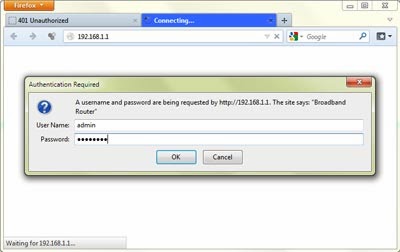
Generally Routers or Modems control their access by using HTTP BASIC authentication mechanism. In simple words, when you connect to your Modem/Router from the browser (typically http://192.168.1.1) you will be asked to enter username & password. If you ever forget this password then you will not be able to access your Router/Modem configuration. Even some websites use this BASIC Authentication to allow only certain users to access their site. 

In these cases 'Router Password Kracker' can help you in quickly recovering your lost password. Also Penetration Testers and Forensic Investigators can find this tool very useful in cracking the Router/Modem/Website password.

[Hashcat v0.46] Multi-Threaded Password Hash Cracking Tool


hashcat claims to be the world’s fastest CPU-based password recovery tool, while not as fast as GPU powered hash brute forcing (like CUDA-Multiforcer), it is still pretty fast.

hashcat was written somewhere in the middle of 2009. Yes, there were already close-to-perfect working tools supporting rule-based attacks like “PasswordsPro”, “John The Ripper”. However for some unknown reason, both of them did not support multi-threading. That was the only reason to write hashcat: To make use of the multiple cores of modern CPUs.

Granted, that was not 100% correct. John the Ripper already supported MPI using a patch, but at that time it worked only for Brute-Force attack. There was no solution available to crack plain MD5 which supports MPI using rule-based attacks.

Hashcat, from its first version, v0.01, was called “atomcrack”. This version was very poor, but at least the MD5 kernel was written in assembler utilizing SSE2 instructions and of course it was multi-threaded. It was a simple dictionary cracker, nothing more. But it was fast. Really fast. Some guys from the scene become interested in it and after one week there were around 10 beta testers. Everything worked fine and so requests for more algorithm types, a rule-engine for mutation of dictionaries, a windows version and different attack modes were added. These developments took around half a year, and were completely non-public.


Features
  • Multi-Threaded
  • Multi-Hash (up to 24 million hashes)
  • Multi-OS (Linux, Windows and OSX native binaries)
  • Multi-Algo (MD4, MD5, SHA1, DCC, NTLM, MySQL, …)
  • SSE2, AVX and XOP accelerated
  • All Attack-Modes except Brute-Force and Permutation can be extended by rules
  • Very fast Rule-engine
  • Rules compatible with JTR and PasswordsPro
  • Possible to resume or limit session
  • Automatically recognizes recovered hashes from outfile at startup
  • Can automatically generate random rules
  • Load saltlist from external file and then use them in a Brute-Force Attack variant
  • Able to work in an distributed environment
  • Specify multiple wordlists or multiple directories of wordlists
  • Number of threads can be configured
  • Threads run on lowest priority
  • Supports hex-charset
  • Supports hex-salt
  • 80+ Algorithms implemented with performance in mind

Detailed documentation and command line switches can be found here – hashcat.


[Hashcat v0.45] Advanced Password Recovery

* changes v0.44 -> v0.45:

Release with some new algorithms:
  • AIX smd5
  • AIX ssha1, ssha256, ssha512
  • GOST R 34.11-94
We managed also to fix some bugs and implement some additional feature requests

Full changelog:

type: feature
file: hashcat-cli
desc: show status screen also when all hashes were recovered AND add start/stop time too

type: feature
file: hashcat-cli
desc: added -m 6300 = AIX {smd5}
cred: philsmd

type: feature
file: hashcat-cli
desc: added -m 6400 = AIX {ssha256}
cred: philsmd

type: feature
file: hashcat-cli
desc: added -m 6500 = AIX {ssha512}
cred: philsmd

type: feature
file: hashcat-cli
desc: added -m 6700 = AIX {ssha1}
cred: philsmd

type: feature
file: hashcat-cli
desc: added -m 6900 = GOST R 34.11-94
cred: Xanadrel

type: feature
file: hashcat-cli
desc: dropped predefined charsets ?h, ?F, ?G and ?R
trac: #55

type: feature
file: hashcat-cli
desc: added a collection of language-specific charset-files for use with masks
trac: #55

type: feature
file: hashcat-cli
desc: changed the E rule to lowercase all input before processing, its more intuitive
trac: #110

type: feature
file: rules
desc: added a more more complex leetspeak rules file from unix-ninja
trac: #112

type: feature
file: hashcat-cli
desc: changed outfile opts to line up with OCL style
trac: #120

type: feature
file: hashcat-cli
desc: --remove in combination w/ external salts should output plain hash files only (no salt)
trac: #153

type: bug
file: hashcat-cli
desc: fix progress line in status screen when all hashes were recovered

type: bug
file: hashcat-cli
desc: fix for some possible memory overflow problems

type: bug
file: hashcat-cli
desc: an external salt sort failure caused some hashes not to be checked against the digests
trac: #74

type: bug
file: hashcat-cli
desc: fixed a null-pointer dereference that can lead to a segmentation fault
trac: #104

type: bug
file: hashcat-cli
desc: fixed a bug if hashlist contains words with ascii character code >= 0x80
trac: #108

[Aircrack-ng 1.2 Beta 1] 802.11 WEP and WPA-PSK keys cracking tool

Aircrack-ng is an 802.11 WEP and WPA-PSK keys cracking program that can recover keys once enough data packets have been captured. It implements the standard FMS attack along with some optimizations like KoreK attacks, as well as the all-new PTW attack, thus making the attack much faster compared to other WEP cracking tools.

Changelog summary

  • Compilation fixes on all supported OSes.
  • Makefile improvement and fixes.
  • A lot of fixes and improvements on all tools and documentation.
  • Fixed licensing issues.
  • Added a few new tools and scripts (including distributed cracking tool).
  • Fixed endianness and QoS issues.

Detailed changelog

* Airmon-ng: Added chipset information for ar9170usb, wl, rt2800usb, ar9271, wl12xx, RT3070STA, ath9k_htc, r871x_usb_drv, ath5k, carl9170 and various Intel drivers.
* Airmon-ng: Fixed chipset information ipw2200.
* Airmon-ng: Fixed output for r8187 driver.
* Airmon-ng: Improved chipset information for a few drivers.
* Airmon-ng: Support for displaying information about ath9k.
* Airmon-ng: Added 'check kill' to automatically kill services that could interfere.
* Airmon-ng: Fixed issues with Intel chipsets detection.
* Airmon-ng: Updated iw download link.
* Airmon-ng: Better mac80211 handling
* Airmon-ng: Added detection for WiLink TI driver, rtl819xU, iwlwifi.
* Airmon-zc: Improved version of Airmon-ng with more detailled information.
* Airdecap-ng: Fixed decoding QoS frames (Closes: #667 and #858).
* Airgraph-ng: Use Aircrack-ng Makefile instead of its own.
* Airbase-ng: Fixed bug using clients list.
* Airbase-ng: Fixed issue with QoS (ticket #760).
* Airbase-ng: Fixed sending beacons with null SSID.
* Airbase-ng: Allow non ASCII ESSID
* Airodump-ng: Fixed buffer overflow (ticket #728).
* Airodump-ng: Fixed channel parsing.
* Airodump-ng: Fixed FreeBSD battery reading.
* Airodump-ng: Renamed "Packets" column to "Frames" ("Packets" was not correct).
* Airodump-ng: Fixed XML bugs when outputting NetXML: ESSID containing '&' or chinese characters, when multiple encryption are used.
* Airodump-ng: Add alternative paths for Airodump-ng OUI file.
* Airodump-ng: Added GPSd 2.92+ support (JSON).
* Airodump-ng: Add option --manufacturer to display manufacturer column on airodump-ng.
* Airodump-ng: Add feature to show APs uptime (--uptime) based on the timestamp.
* Airodump-ng-OUI-update: Fixed OUI URL and allow CURL redirect (ticket #829).
* Airdrop-ng: removed .py from file names.
* Airdrop-ng: Fixed bug in installer.
* Airdrop-ng: Fixed OUI lookup.
* Airdrop-ng: Fixed bug when several BSSID have the same ESSID.
* Airdrop-ng: Doesn't constantly parse anymore, wait 5 seconds each time it parses.
* Airdrop-ng: Fixed crash when failing to get channel or when rules file didn't exist.
* Airdrop-ng: Fixed to use lorcon.py/lorcon2 libs.
* Airdrop-ng: Updated README.
* Airdrop-ng: Fixed error preventing update to work.
* Versuck-ng: New script to do the same thing as the kismet autowep plugin from the CLI.
* Aircrack-ng: Fixed counter display error when cracking WPA.
* Aircrack-ng: Added output of the WPA handshake to EWSA project file.
* Aircrack-ng: Added output of the WPA handshake to oclhashcat+ project file.
* Aircrack-ng: Added benchmark option, -S.
* Aircrack-ng: Fixed -u option.
* Aircrack-ng: PIC fix for hardened systems from Francisco Blas Izquierdo Riera (klondike)
* Aircrack-ng: Allow dictionaries larger than 2Gb.
* Aircrack-ng: Give a better message when there's an error with the dictionary.
* Aircrack-ng: Prevent a buffer overflow from happening (Wojciech Waga).
* Aireplay-ng: Added migration mode attack from Leandro Meiners and Diego Sor from Core Security (BlackHat Las Vegas 2010)
* Aireplay-ng, Airodump-ng: Added option to ignore issue with -1 channel.
* Airserv-ng: Fixed crash when clients disconnect.
* Besside-ng-crawler: Added EAPOL Crawler.
* Airdecloak-ng: Fixed bug when using pcap files with PPI headers.
* dcrack: Distributed cracking server/client
* wifi-detect.sh: reference script for testing wifi card detection using iwconfig vs ls /sys/class/net
* WPA Clean: Tool to merge and clean WPA capture files.
* Wireless Panda: C# Library to parse Airodump-ng output files (and added example project).
* OSdep (Linux): Setting fixed bitrates on mac80211 2.6.31 and up.
* OSdep (Linux): Added support for nl80211 thanks to impulse32. Use 'make libnl=true' to add netlink support (Ticket #1004).
* Manpages: Improvement and fixes for Airgraph-ng, Airodump-ng, packetforge-ng, Aircrack-ng
* Manpages: Fixed various spelling issues and single quote issues.
* Makefiles: Added tests for the different tools.
* Makefiles: Various fixes and improvements.
* Makefiles: Added support for libgrypt instead of OpenSSL via parameter.
* Patches: Added a few patches.
* Removed useless script: patchchk.
* Finally fixed licensing issues.
* Fixed endianness issues in most of the tools.
* Fixed cppcheck errors (Ticket #957).
* Fixed various compilation issues on Linux and Cygwin, GNU/Hurd, Darwin (OSX) and Sparc.
* Fixed compilation on recent gcc versions on Linux, Cygwin.
* Added instructions for Travis CI: Free Hosted Continuous Integration Platform for the Open Source Community.
* Added Readme.Md for GitHub. Aircrack-ng subversion repository is synced on GitHub: http://github.com/aircrack-ng/aircrack-ng
* Various other small bug fixes.

[Salted Hash Kracker v1.0] Tool to recover the Password from Salted Hash text


Salted Hash Kracker is the free all-in-one tool to recover the Password from Salted Hash text.

These days most websites and applications use salt based hash generation to prevent it from being cracked easily using precomputed hash tables such as Rainbow Crack. In such cases, 'Salted Hash Kracker' will help you to recover the lost password from salted hash text.

It also allow you to specify the salt position either in the beginning of password(salt+password) or at the end of the password (password+salt). In case you want to perform normal hash cracking without the salt then just leave the 'Salt field' blank.

Currently it supports password recovery from following popular Hash types
  • MD5
  • SHA1
  • SHA256
  • SHA384
  • SHA512

It uses dictionary based cracking method which makes the cracking operation simple and easier. You can find good collection of password dictionaries (also called wordlist) here & here

It is fully portable and works on all Windows platforms starting from Windows XP to Windows 8.

[Hash Kracker Console] Tool to find out the password from the Hash


Hash Kracker Console is the all-in-one command-line tool to find out the password from the Hash.


Currently it supports password recovery from following popular Hash types
  • MD5
  • SHA1
  • SHA256
  • SHA384
  • SHA512

Also it offers 4 types of Password Recovery methods based on the complexity of password
  • Dictionary Crack
  • Hybrid Crack
  • Brute-force Crack
  • Pattern based Brute-force Crack

Being a command-line makes it faster and easy for automation. It is fully portable tool and includes installer also.

It works on wide range of platforms starting from Windows XP to Windows 8.

Download Hash Kracker Console v1.0
More